Gentle Gastroscopy at the Surgery & Endoscopy Centre 1160
Expertise
Do you suffer from persistent stomach pain, nausea or heartburn? A gastroscopy in Vienna is the most reliable method for detecting and specifically treating conditions of the oesophagus, stomach and duodenum at an early stage.
At the Surgery & Endoscopy Centre 1160, experienced specialists with comprehensive expertise in gastroenterology in Vienna take care of your health. The gastroscopy at our centre, in Vienna’s 16th district, combines the highest medical precision with comfort and individual care – for your health and wellbeing.
As a practice, you benefit from short waiting times, personal consultation and the use of the latest technology. The gastroscopy in Vienna is performed under gentle sedation on request, so that the examination is completely painless and stress-free for you.
What is a gastroscopy?
A gastroscopy (also known as an upper endoscopy) is an endoscopic examination in which a thin, flexible tube with a camera is passed through the mouth into the stomach. This allows the oesophagus, stomach and duodenum to be examined for inflammation, ulcers, infections or malignant changes.
During the examination, tissue samples can be taken or minor therapeutic measures (e.g. polypectomy) can be carried out – painlessly and precisely.
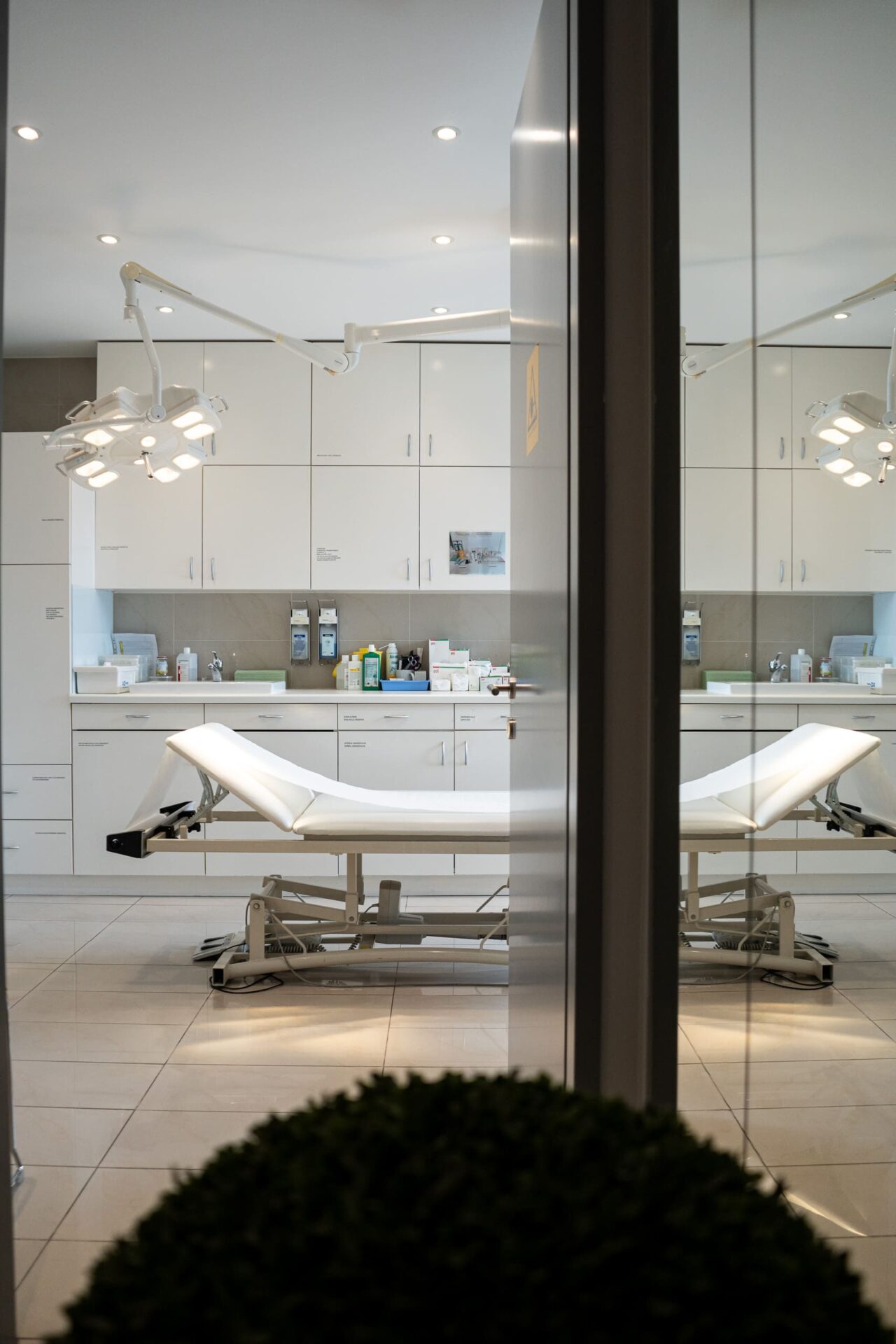
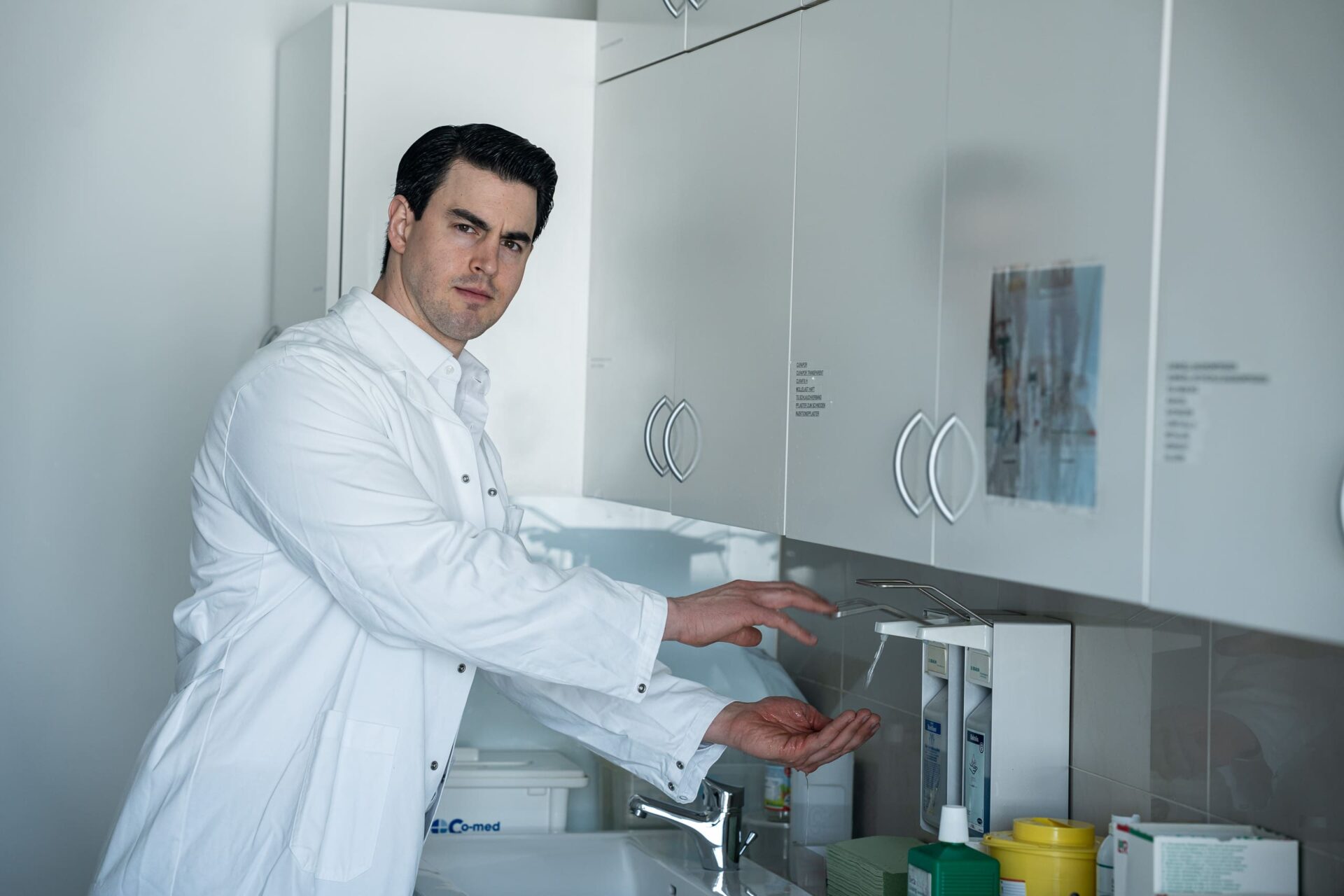
A gastroscopy in Vienna focuses on safety, hygiene and state-of-the-art technology, to guarantee a reliable result with minimal strain.
When should you have a gastroscopy?
Dr Bernd Weiner recommends a gastroscopy for:
- Heartburn & reflux
- Persistent stomach pain, bloating or nausea
- Suspected gastritis or stomach ulcers
- Swallowing difficulties or loss of appetite
- Unexplained weight loss or iron deficiency
- Blood in the stool or vomiting blood
- Check-ups after stomach surgery or in cases of a family history of stomach cancer
In a detailed initial consultation, we will discuss together whether a gastroscopy is medically necessary and what preparation is required. The gastroscopy in Vienna takes place directly at our private practice.
Preparation, Sedation & Aftercare
Before a gastroscopy near you, a detailed consultation takes place. During this, we clarify:
- What symptoms you have
- Which medications you may take or need to pause
- How sedation during the gastroscopy works
The examination usually takes only 10–15 minutes. Thanks to gentle sedation, the gastroscopy is completely painless – you fall asleep comfortably and wake up calmly afterwards.
After the examination:
After a short rest period at our practice, you can go home again – however, you should not drive yourself if you have been sedated. Dr Bernd Weiner will then discuss the results and next steps with you personally.
Why have a gastroscopy in Vienna with Dr Weiner at the Surgery & Endoscopy Centre 1160?
As an experienced gastroenterologist in Vienna, Dr Weiner combines modern medicine with personal care.
Your benefits with us:
- Individual consultation & care without long waiting times
- Modern, gentle gastroscopy in Vienna with high-quality equipment
- Sedated gastroscopy for a stress- & pain-free examination
- Comprehensive diagnostics & targeted treatment planning
- Aftercare in a calm practice atmosphere
Whether at our practice or, in more complex cases, as an inpatient in hospital – I will guide you through the entire process with experience and empathy.
What is the difference between an endoscopy, a gastroscopy and a colonoscopy?
Endoscopy is an umbrella term for all examinations that use a camera for diagnostic purposes. A gastroscopy examines the oesophagus, stomach and duodenum, while a colonoscopy covers the entire colon.
How do I prepare for an endoscopy in Vienna?
For a gastroscopy, the stomach should be empty, meaning you should not eat or drink anything for at least 6 hours before the examination. For a colonoscopy, thorough bowel cleansing is required, carried out using a laxative.
Is a gastroscopy painful?
No. Thanks to modern sedation during a gastroscopy, the examination is completely pain-free. You sleep peacefully and notice nothing of the examination.
Do I need to fast before a gastroscopy?
Yes. As a rule, you should not eat or drink anything for at least 6 hours before the examination. You will receive precise instructions during the consultation.
What are the risks of a gastroscopy?
The examination is very safe. Mild sore throat or a feeling of pressure after the examination are rare, harmless side effects. Serious complications are extremely rare.
When will I find out the results?
We discuss initial results straight after the examination. If tissue samples were taken, the histology result is usually available within a few days.
Consultant Dr Bernd Weiner, MBA
Specialist in General and Visceral Surgery
Dr Bernd Weiner studied medicine at the Medical University of Vienna and completed his specialist training at the Surgical Department of the Göttlicher Heiland Hospital in Vienna under Head of Department Dr Viktor Grablowitz. Further stages of his career took him to the University Clinics for Surgery in Heidelberg and at the AKH Vienna, before he spent many years as a Senior Consultant at Krankenhaus Göttlicher Heiland Wien, where he headed the hernia and reflux surgery department. Today, he is the founder and director of the Surgery & Endoscopy Centre 1160 Vienna, specialising in hernia, reflux, visceral, and endoscopic surgery.
Member of the Austrian Society of Surgery (ÖGCH), the Austrian Society of Gastroenterology and Hepatology (ÖGGH), the German Hernia Society (DHG), and the German Hernia Care Society (DHCH).